Complete Guide to ROC Compliance for Companies in India
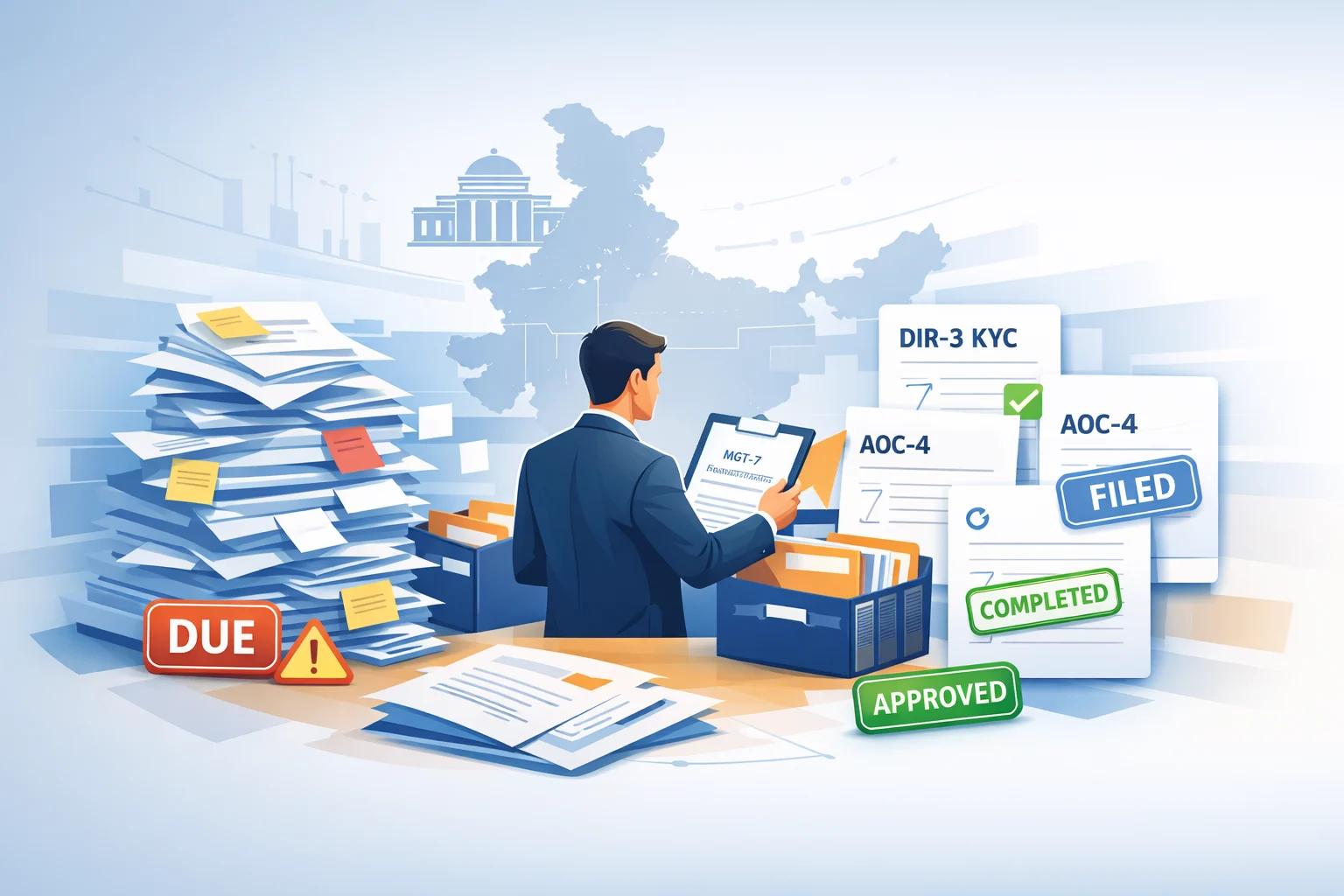
Registrar of Companies (ROC) compliance is an essential regulatory responsibility for all companies operating in India. Companies registered under the Companies Act must adhere to various statutory filing requirements, maintain accurate corporate records, and meet specific regulatory deadlines throughout the financial year.
Failure to comply with ROC regulations may result in financial penalties, legal consequences, and reputational risks for businesses.
This guide explains the key aspects of ROC compliance, including mandatory filings, statutory deadlines, penalties and best practices that Company Secretaries and compliance professionals should follow to ensure regulatory compliance.
What is ROC Compliance?
ROC compliance refers to the mandatory regulatory filings and documentation that companies must submit to the Registrar of Companies through the Ministry of Corporate Affairs (MCA) portal.
These filings ensure transparency in corporate operations and help regulatory authorities monitor company activities, financial performance, and statutory governance practices.
All companies registered in India — including Private Limited Companies, Public Limited Companies, and One Person Companies (OPCs) — must comply with ROC regulations throughout their lifecycle.
Company Secretaries and compliance professionals are typically responsible for managing these filings and ensuring that companies meet all regulatory obligations within the prescribed timelines.
Mandatory ROC Filings for Companies in India
Companies must submit several statutory filings to the MCA during the financial year. These filings provide regulatory authorities with updated information about the company's financial position, directors, and governance structure.
Annual Return Filing (MGT-7)
The Annual Return provides a comprehensive overview of a company's shareholders, directors, and corporate structure as of the end of the financial year.
Financial Statement Filing (AOC-4)
Companies must submit their audited financial statements, including the balance sheet, profit and loss account, and auditor's report.
Director KYC Filing (DIR-3 KYC)
Directors must annually verify their identity and contact details through the DIR-3 KYC filing with the MCA.
Appointment and Resignation Filings (DIR-12)
Changes in the board of directors must be reported to the MCA using Form DIR-12.
Key ROC Compliance Deadlines
Meeting ROC filing deadlines is essential to avoid penalties and regulatory scrutiny. Companies must ensure that annual filings are completed within the timelines specified under the Companies Act.
- Annual financial statement filing
- Annual return submission
- Director KYC verification
- Event-based filings such as director appointments or share allotments
Conclusion
ROC compliance is an essential responsibility for every company operating in India. Understanding filing requirements, maintaining statutory records, and meeting regulatory deadlines are critical to ensuring smooth corporate governance.
With the increasing complexity of regulatory obligations, many Company Secretary firms are adopting digital compliance management platforms to automate filings, monitor deadlines, and maintain organised compliance workflows.
Frequently Asked Questions
What is ROC compliance in India?
ROC compliance refers to the mandatory filings and regulatory requirements that companies must submit to the Registrar of Companies through the Ministry of Corporate Affairs (MCA). These filings include annual returns, financial statements, director KYC updates, and other statutory disclosures required under the Companies Act, 2013.
Which companies are required to file ROC compliance?
All companies registered under the Companies Act in India — including Private Limited Companies, Public Limited Companies, and One Person Companies (OPCs) — are required to complete ROC filings and maintain statutory compliance with the MCA.
What happens if ROC filings are not submitted on time?
Failure to submit ROC filings within the prescribed deadlines may result in late filing penalties, additional regulatory fines, director disqualification, or in severe cases, the company may be struck off from the ROC register.
How can Company Secretaries manage ROC compliance efficiently?
Company Secretaries can manage ROC compliance more efficiently by using compliance management platforms such as CSTrax, which help automate compliance reminders, track filing deadlines, organise statutory records, and manage multiple client entities from a centralised dashboard.
Ready to streamline your compliance management?
Discover how CSTrax can help your firm manage compliance more efficiently.
Book a Demo